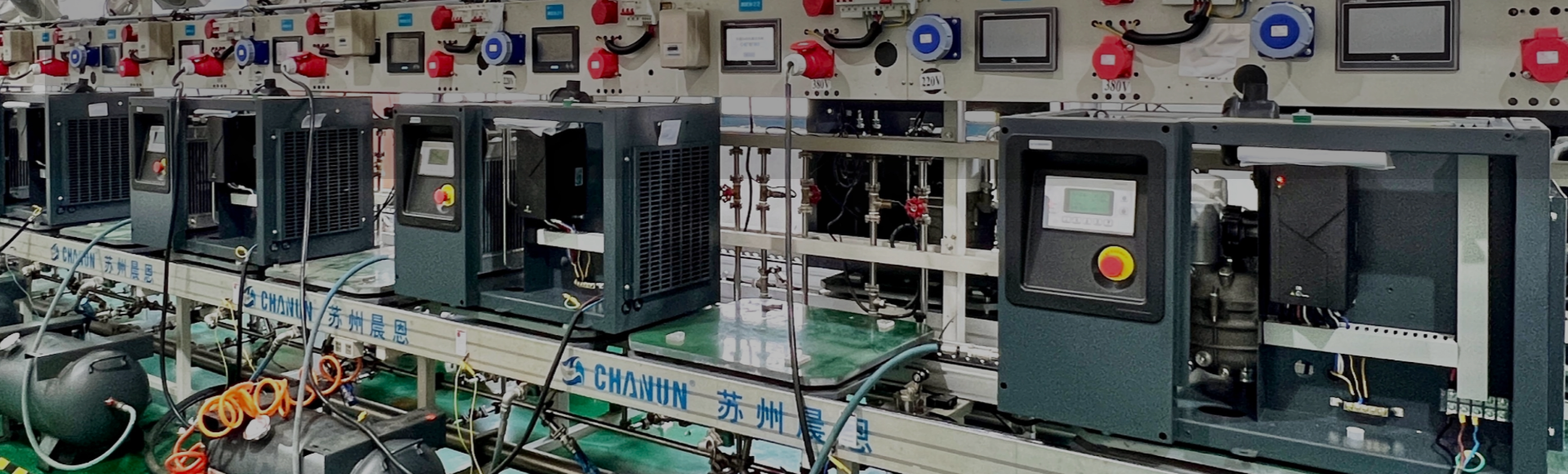

Innovative Design: How Oil-Free Scroll Compressors Work
Release time:
2026-08-06
Innovative Design: How Oil-Free Scroll Compressors Work Table of Contents 1. Introduction to Oil-Free Scroll Compressors 2. Understanding Scroll Technology 3. Key Components and Design Features 4. Operation Principles of Oil-Free Scroll Compressors 5. Advantages of Oil-Free Scroll Compressors 6. Applications in Various Industries 7. Maintenance and Care for Optimal Per
Innovative Design: How Oil-Free Scroll Compressors Work
Table of Contents
- 1. Introduction to Oil-Free Scroll Compressors
- 2. Understanding Scroll Technology
- 3. Key Components and Design Features
- 4. Operation Principles of Oil-Free Scroll Compressors
- 5. Advantages of Oil-Free Scroll Compressors
- 6. Applications in Various Industries
- 7. Maintenance and Care for Optimal Performance
- 8. The Future of Scroll Compressors
- 9. Frequently Asked Questions
- 10. Conclusion
1. Introduction to Oil-Free Scroll Compressors
Oil-free scroll compressors are revolutionizing the way we think about compressed air systems. Unlike traditional compressors that rely on oil for lubrication, oil-free scroll compressors utilize a unique mechanism that allows for clean and efficient air compression. This innovation not only enhances efficiency but also reduces maintenance costs and environmental impact, making it a favored choice across various industries.
In this article, we will explore the inner workings of oil-free scroll compressors, their unique design features, operational principles, and the myriad benefits they offer. We will also discuss their applications in different sectors and the future trends shaping their development.
2. Understanding Scroll Technology
Scroll compressors operate using a distinct technology that sets them apart from traditional rotary or reciprocating compressors. The fundamental principle of a scroll compressor involves two spiral-shaped scrolls: one is stationary while the other orbits around it. This motion compresses the refrigerant or air within the pockets formed by the scrolls, thereby creating high pressure.
**Key Advantages of Scroll Technology:**
- **Efficiency:** The design reduces energy consumption significantly compared to traditional compressors.
- **Quiet Operation:** Scroll compressors operate at lower noise levels due to the continuous compression process.
- **Durability:** With fewer moving parts, the wear and tear on components are minimized, extending the lifespan of the unit.
3. Key Components and Design Features
Understanding the components and design of oil-free scroll compressors is essential to appreciate their functionality. The primary components include:
3.1 Scroll Elements
The two spiral scrolls are the heart of the compressor. The **fixed scroll** remains stationary, while the **moving scroll** orbits around it, compressing the air or refrigerant.
3.2 Housing
The compressor housing encases the scroll elements and is designed to withstand high pressure while minimizing leakage.
3.3 Drive Mechanism
The drive mechanism typically includes a motor that rotates the moving scroll. This motor is often a variable speed drive, allowing for precise control of the compression process.
3.4 Suction and Discharge Ports
Suction ports allow air or refrigerant to enter the compressor, while discharge ports release the compressed air or refrigerant to the desired application.
4. Operation Principles of Oil-Free Scroll Compressors
The operation of oil-free scroll compressors can be broken down into several key steps:
4.1 Suction Phase
Air enters the compressor through the suction port. As the moving scroll orbits, it traps a volume of air between itself and the fixed scroll.
4.2 Compression Phase
As the scroll continues to orbit, the trapped air is pushed toward the center of the scroll assembly, reducing its volume and increasing its pressure.
4.3 Discharge Phase
Once the air reaches the desired pressure, it is expelled through the discharge port and delivered to the application.
This continuous cycle allows for a smooth operation, minimizing pulsations and vibrations commonly associated with other types of compressors.
5. Advantages of Oil-Free Scroll Compressors
Oil-free scroll compressors offer a range of benefits that make them an attractive option for many applications:
5.1 Environmental Friendliness
By eliminating the need for oil, these compressors reduce the risk of oil contamination in the environment, making them compliant with stricter environmental regulations.
5.2 Low Maintenance Requirements
With fewer moving parts and no oil changes necessary, maintenance is significantly reduced, leading to lower operational costs.
5.3 Improved Air Quality
Oil-free operation ensures that the compressed air remains uncontaminated, making it ideal for applications in food processing, pharmaceuticals, and other industries requiring high air quality.
5.4 Energy Efficiency
Oil-free scroll compressors are designed for high efficiency, often achieving better performance at lower energy costs compared to their oil-lubricated counterparts.
5.5 Versatility
These compressors can be used in a wide range of applications, from industrial manufacturing to healthcare and beyond.
6. Applications in Various Industries
Oil-free scroll compressors serve a broad spectrum of industries. Their versatility and efficiency make them suitable for the following applications:
6.1 Medical and Dental
In medical and dental facilities, the purity of compressed air is crucial. Oil-free scroll compressors provide clean air essential for patient safety and equipment performance.
6.2 Food and Beverage
The food industry requires oil-free air to prevent contamination. These compressors are used in packaging, processing, and storage to maintain product integrity.
6.4 Electronics Manufacturing
In electronics manufacturing, oil-free scroll compressors support cleanroom environments, where even the slightest contamination can compromise product quality.
6.5 Automotive
In automotive applications, these compressors are used for pneumatic tools and equipment, ensuring reliable performance without the risk of oil contamination.
7. Maintenance and Care for Optimal Performance
While oil-free scroll compressors require less maintenance than traditional compressors, routine checks are essential for ensuring optimal performance:
7.1 Regular Inspections
Conduct routine inspections to identify wear on components and ensure the scrolls are operating correctly.
7.2 Cleaning Filters
Maintain clean air filters to ensure maximum efficiency and prevent dust and debris from entering the compressor.
7.3 Monitor Performance
Keep an eye on pressure and temperature readings. Sudden changes can indicate potential issues that need to be addressed.
7.4 Software Updates
If your compressor is equipped with a control system, regularly update the software to benefit from the latest features and improvements.
8. The Future of Scroll Compressors
The future of oil-free scroll compressors looks promising as innovations continue to emerge. Advancements in materials technology may lead to even more efficient designs, while smart technologies and IoT integration will enhance monitoring and control capabilities.
Furthermore, as industries increasingly prioritize sustainability, oil-free scroll compressors are likely to become more prevalent, reshaping how we approach compressed air systems across various applications.
9. Frequently Asked Questions
9.1 What is an oil-free scroll compressor?
An oil-free scroll compressor is a type of compressor that utilizes two spiral scrolls to compress air or refrigerant without the use of oil for lubrication.
9.2 How does an oil-free scroll compressor work?
The compressor operates by trapping air between two spiraled scrolls, compressing it as the moving scroll orbits around the fixed scroll, and then discharging the compressed air.
9.3 What are the benefits of using an oil-free scroll compressor?
Benefits include environmental friendliness, low maintenance requirements, improved air quality, energy efficiency, and versatility in various applications.
9.4 In what industries are oil-free scroll compressors commonly used?
They are commonly used in medical, food and beverage, electronics manufacturing, automotive, and other industries requiring high-quality compressed air.
9.5 How can I maintain my oil-free scroll compressor?
Routine inspections, cleaning filters, monitoring performance, and updating software if applicable are essential for maintenance.
10. Conclusion
Oil-free scroll compressors represent a significant advancement in compressed air technology, providing a cleaner, more efficient solution for a variety of applications. Their innovative design and unique operational mechanisms not only enhance performance but also contribute to sustainability and cost-effectiveness. As industries continue to embrace these compressors, understanding their workings and benefits will be crucial for professionals seeking to optimize their systems. Investing in oil-free scroll compressors is not just a commitment to efficiency; it’s a step toward a cleaner and more sustainable future.
Related news


Service Hotline: 86 13862059949
CONTACT US
Address: No.58, Dongfu Road, Suzhou Industrial Park,Suzhou, jiangsu Province, China.
Tel: (+86) 0512-62529535
WhatsApp/Wechat: (+86) 13862059949
E-mail: jiaqi.wu@chanuncompressor.com
Copyright © CHANUN 2020 All rights reserved 苏ICP备08024400号-4
www.300.cn