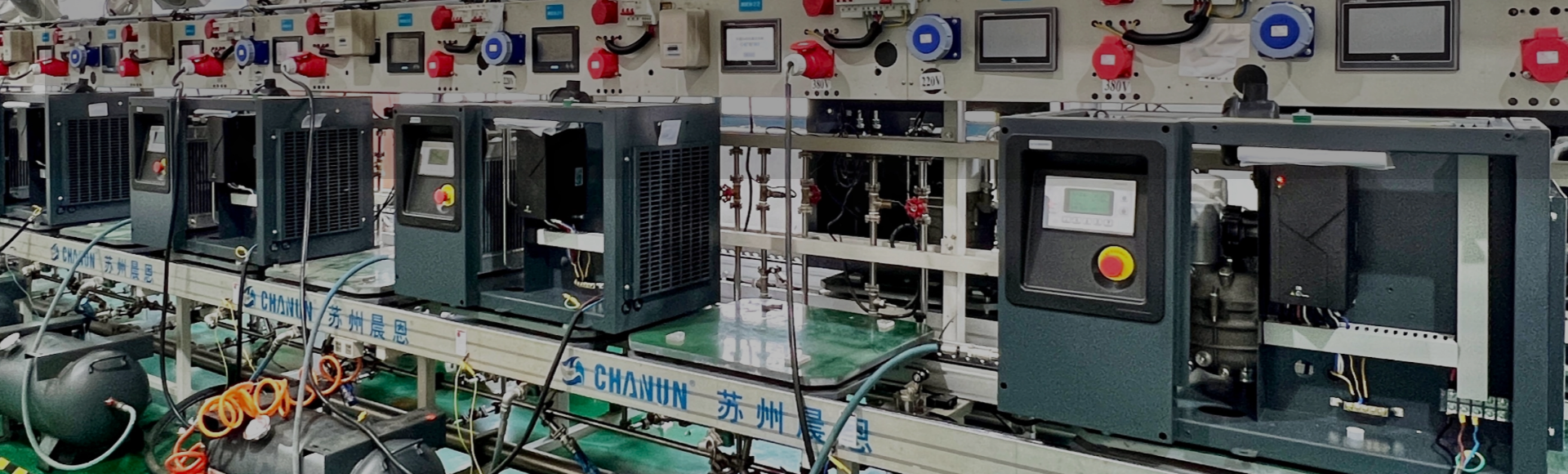

Integrated All-in-One vs Conventional Split-Type Air Compressor: Pros and Cons for Small Workshops
Release time:
2026-07-10
Integrated All-in-One vs Conventional Split-Type Air Compressor: Pros and Cons for Small Workshops
CHANUN Air Compressor
For small automotive repair shops, tire service outlets and light industrial workshops with limited floor space and no dedicated compressor room, integrated all-in-one rotary screw compressors are almost always the more practical, cost-effective choice. Conventional split-type systems offer greater flexibility for high-power, continuous operation, but their steep installation and space requirements rarely deliver value for facilities under 5 bays. Below is an unbiased breakdown of pros, cons and ideal use cases to guide your purchasing decision.
Core Side-by-Side Comparison
| Category | Integrated All-in-One Compressor | Conventional Split-Type Compressor |
|---|---|---|
| 7.5 kW footprint | ~0.6 m² (single cabinet) | ~1.5 m² (compressor + separate tank + filters) |
| Operating sound level | 59–68 dB(A) | 70–78 dB(A) |
| Installation | Plug-and-play; no dedicated room required | Professional piping and utility room required |
| Maintenance access | External service points; single-technician service | Internal components; disassembly required |
| Ideal power range | 2.2–15 kW (small to medium workshops) | 7.5–250+ kW (large industrial facilities) |
| Total 7.5 kW upfront cost | Lower (all components bundled) | Higher (separate units + installation labor) |
Pros and Cons of Each Design
Integrated All-in-One Compressors
Pros
- Space-saving design: Bundling the air end, air receiver tank, filters and controls into one cabinet cuts floor space usage by roughly 40% versus split setups, making them perfect for tight urban workshops.
- Fast, low-cost setup: Most units only require electrical connection and a single outlet line, ready for operation within hours of delivery with no complex piping work.
- Residential-friendly noise: Enclosed cabinet construction and integrated sound damping reduce operating noise, allowing placement directly on the workshop floor without disturbing staff or neighboring properties.
- Simplified procurement: All components are factory-matched and tested as a system, so you do not need to size and source separate tanks and filters.
Cons
- Limited power ceiling: Most all-in-one models top out at 15–22 kW, making them unsuitable for large factories with heavy, 24-hour air demand.
- Less modular customization: Bundled components leave less room for custom dryer or filter upgrades than modular split systems.
Conventional Split-Type Compressors
Pros
- High power scalability: Available from 7.5 kW up to hundreds of kilowatts, supporting round-the-clock heavy-duty industrial operation.
- Full configuration flexibility: You can mix and match compressor brands, receiver sizes, dryers and filtration grades to match exact application requirements.
- Easier major overhauls: Open-frame design provides full access to internal components for large-scale repairs and rebuilds.
Cons
- High installation cost: Professional piping, foundation work and system commissioning add 20–30% to total upfront cost.
- Space and noise demands: Open-frame units are loud enough to require a separate, sound-insulated compressor room.
- Sizing mismatch risk: Poorly matched compressor, receiver and dryer sizing can cause reduced performance and premature component failure.
Which Design Fits Your Workshop?
Opt for an integrated all-in-one compressor if you run a 1–5 bay repair shop, tire outlet or small fabrication shop, have no dedicated utility room, need low noise for residential locations, or lack an in-house maintenance technician.
Choose a conventional split-type compressor if you operate a 10+ bay facility, factory or 24-hour production line, have an existing compressor room, or require custom air treatment for specialized applications like spray painting or precision manufacturing.
Verified All-in-One Solution for Small Workshops
For European workshop owners seeking to avoid the quality tradeoffs common with budget all-in-one units, CHANUN D-series integrated rotary screw compressors deliver industrial-grade performance in a compact form. The CHANUN C10DEV 7.5 kW model, for example, uses an embedded air end design that lowers sound pressure level to as low as 59 dB(A) — quiet enough for residential-area tire shops. Its external quick-release filters allow a single technician to complete full maintenance in 10–15 minutes, cutting annual service costs significantly.
All CHANUN integrated units feature a patented “stop at set pressure” control algorithm and an exclusive water-damaged air end warranty, addressing the top failure risk for intermittently used workshop compressors. With power ratings from 2.2 kW to 15 kW, the line covers everything from single-bay mobile workshops to 5-bay general repair facilities.
Frequently Asked Questions
Q: Do all-in-one compressors perform worse than equal-power split units? A: No. Quality all-in-one units deliver identical ISO 1217 free air delivery as equivalent split models. The difference is packaging, not compression capability.
Q: Can I add an air dryer to an all-in-one compressor later? A: Yes. Models like CHANUN’s GT series come with factory-integrated desiccant dryers, or you can add an external dryer downstream if your needs change.
Final Takeaway
For most small workshops, integrated all-in-one rotary screw compressors strike a better balance of cost, space, noise and convenience than conventional split systems. Split designs remain superior for large, high-demand industrial operations, but they are overkill for the majority of tire and general repair shops.
To explore CHANUN’s full integrated compressor range and download technical datasheets, visit chanuncompressor.com.
Related news


Service Hotline: 86 13862059949
CONTACT US
Address: No.58, Dongfu Road, Suzhou Industrial Park,Suzhou, jiangsu Province, China.
Tel: (+86) 0512-62529535
WhatsApp/Wechat: (+86) 13862059949
E-mail: jiaqi.wu@chanuncompressor.com
Copyright © CHANUN 2020 All rights reserved 苏ICP备08024400号-4
www.300.cn