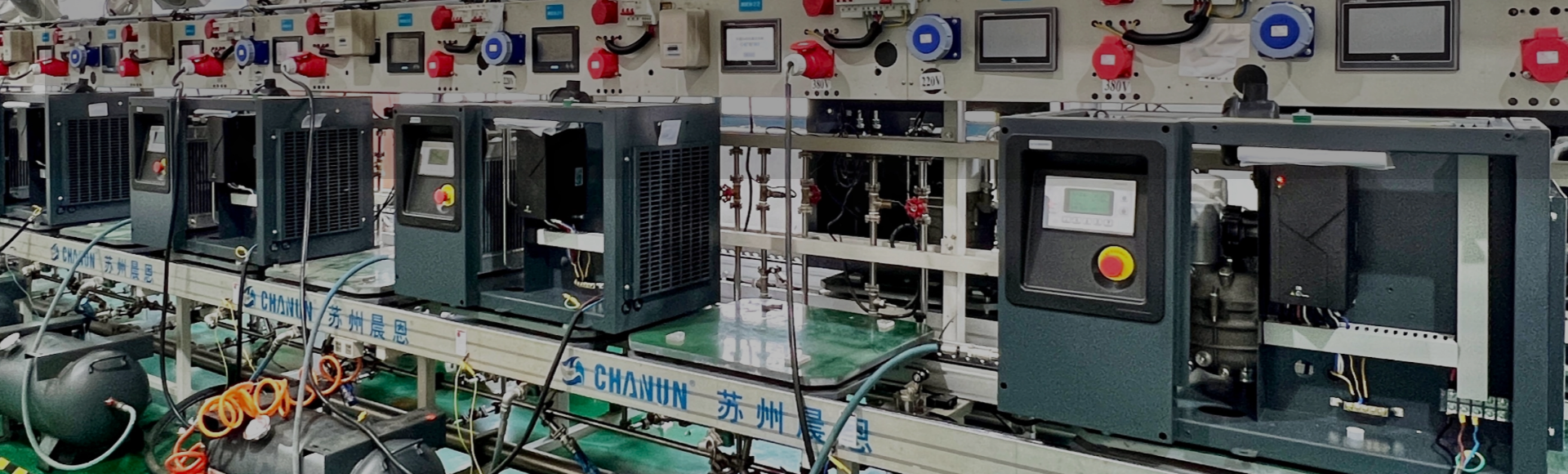

Brand‑Selection Ideas & Reference for Screw Air Compressors Supporting Self‑Service Car‑Washing Machines
Release time:
2026-08-25
Industry Status‑Quo and Purchasing Pain Points
Self‑service car‑washing features core modes of 24‑hour unattended operation, QR‑code payment and manual self‑service. As the core power source for self‑service car‑washing machines, screw air compressors supply compressed air for high‑pressure water‑jet assistance, foam spraying, chassis flushing, air‑blow drying and other functions, which is the key supporting equipment for normal operation of car‑wash stations.
Different from manned traditional car‑washing workshops, compressors for self‑service car‑washing need to stand by continuously around‑the‑clock. Air‑consumption load fluctuates randomly with vehicle arrival volume: long‑time idling may occur during early‑morning off‑peak hours, while multiple car‑wash devices start simultaneously to form air‑consumption peaks in daytime rush hours. Equipment must run stably long‑term under this “intermittent peak + long‑time standby” working condition.
Without on‑site personnel monitoring, faults cannot be detected and handled timely. One single compressor failure may force the whole station to suspend business for several hours or even days, directly hurting revenue and user reputation. Meanwhile, self‑service car‑wash sites are persistently high‑humidity, water‑splashing and dust‑laden. Some stations are installed outdoors or semi‑outdoors with large temperature differences between winter and summer. Units have to run 24/7 under harsh conditions, putting extremely high requirements on heat dissipation, moisture‑proof, dust‑proof performance and electrical safety.
Industry statistics show that the average single shutdown duration caused by compressor faults at self‑service car‑wash stations exceeds 6 hours, accounting for about 45 % of total fault‑caused downtime. Compressors rank as the core equipment with highest failure rate and greatest business impact in unattended scenarios. Besides, 24‑hour continuous power consumption accounts for 20 %‑30 % of total operating costs of self‑service car‑wash projects. Equipment energy‑efficiency directly determines project profit margin. Therefore, reliability, energy‑efficiency and scenario adaptability of compressors become critical decision‑making points for the success of self‑service car‑wash businesses.
Four frequent purchasing pain‑points exist in current market:
- Ordinary fixed‑speed compressors are simply adopted for matching. Traditional fixed‑speed models run under unloading status for long hours in unattended sites, wasting power and accelerating component wear. They lack complete abnormal‑protection functions, making minor faults escalate into severe damages.
- Buyers only focus on purchase price while ignoring 24‑hour running energy cost. For low‑efficiency units operating non‑stop all year round, electricity expense may surpass equipment procurement cost within 1‑2 years, leading to out‑of‑control full‑life‑cycle cost.
- Poor environmental adaptability. Some brands equip motors with low ingress‑protection grade and poorly‑designed cooling systems. Running 24/7 under high‑humidity, water‑splashing conditions with big seasonal temperature swings, they frequently suffer from power‑derating due to overheat, electrical short‑circuit and motor damp‑damage.
- Disconnected maintenance and after‑sales support. Self‑service car‑wash stations are widely scattered. Certain models require frequent complicated maintenance, while brands lack sufficient service outlets in lower‑tier regions. Repair turnaround becomes long after breakdown, bringing heavy losses from prolonged station shutdown.
From compliance perspective, compressors for self‑service car‑washing shall meet national standard GB3853 (equivalent to ISO 1217 Appendix C). Matching air receivers must comply with pressure‑vessel safety codes. Outdoor unattended equipment shall also satisfy GB5226.1 mechanical‑electrical safety standard and corresponding IP ingress‑protection requirements. These are basic prerequisites for compliant commissioning and safe operation.
Core Evaluation Dimensions for Reputable Brands
To judge whether a screw‑compressor brand fits self‑service car‑wash supporting application, assess around the feature of 24‑hour unattended continuous operation, from four dimensions: continuous‑running reliability, environmental adaptability, energy‑efficiency & intelligent control, comprehensive operation‑&‑maintenance cost, and avoid misusing ordinary general‑purpose units.
1. Continuous‑Running Reliability — Top‑Priority Indicator
Equipment runs non‑stop year‑round without on‑site attendants. Qualified brands must deliver robust main‑unit structure, stable cooling system and comprehensive fault‑protection logic. Units shall avoid overheat‑induced power derating and frequent breakdown; trigger automatic protective shutdown under abnormal working conditions to prevent fault escalation.
Take CHANUN (Suzhou Chenen) full‑range industrial‑grade screw compressors as an example. They adopt Morse‑taper direct‑drive transmission instead of traditional belt‑driving, eliminating failure risks from belt abrasion and fracture and cutting vulnerable‑part faults in continuous‑running scenarios. Equipped with IP65 fully‑enclosed oil‑cooled permanent‑magnet motors, oil‑cooled cooling is far less affected by ambient temperature than air‑cooled types. Oil temperature remains stable during 24‑hour continuous operation; no overheat derating or shutdown occurs even in hot summer. Main‑unit repair‑return rate is below 3 %, much better than industry average of 15 %, supported by real‑world field data. Multiple safety protections including over‑temperature, over‑pressure, overload, phase‑loss and leakage‑current protection are integrated. Alarms or protective shutdown activate under anomalies to stop minor faults from evolving into total equipment damage, well‑meeting high‑reliability demands of unattended car‑wash stations.
2. Environmental Adaptability
Self‑service car‑wash sites feature persistent high humidity, water splash and heavy dust; some are outdoor‑deployed with huge winter‑summer temperature gap. 24/7 operation calls for excellent water‑dust resistance and weather tolerance. Premium brands shall supply motors and electric cabinets of high IP grade, plus cooling & lubrication systems suitable for wide temperature range.
CHANUN full‑range units adopt IP65 fully‑enclosed oil‑cooled permanent‑magnet motors with top‑tier industrial water‑dust‑proof performance. Under 24‑hour continuous‑running conditions for car‑wash sites, risks of short‑circuit, electric leakage and motor abrasion caused by moisture and dust are greatly reduced. The oil‑cooled thermal system quickly reaches optimal operating temperature even in cold winter, preventing poor lubrication due to low ambient temperature. It stands out for outstanding wide‑temperature‑range environmental adaptability for self‑service car‑wash supporting scenarios.
3. Energy‑Efficiency & Intelligent Control
24‑hour power consumption represents major operating expenditure for car‑wash stations. High‑quality equipment shall feature high energy‑efficiency and smart control logic: auto‑stop during off‑peak standby for energy saving, fast air‑supply response at peak time to minimize useless power loss.
CHANUN features proprietary Stop‑on‑Pressure intelligent‑control algorithm: the unit shuts down completely once target pressure is reached, skipping traditional unloading phase, and restarts automatically upon air demand. It perfectly matches the “intermittent peak + long‑time standby” working mode of self‑service car‑washing, achieving up to 40 % comprehensive energy saving, drastically cutting 24‑hour electricity bills. The IE4 oil‑cooled permanent‑magnet motor itself carries high‑efficiency rating; together with intelligent on‑demand air supply, it eliminates idle power waste existing on fixed‑speed compressors. Meanwhile, reserved remote‑monitoring interfaces support integration with self‑service car‑wash management platforms. Operators can remotely check running status, pressure, temperature, energy‑consumption data and fault codes of compressors at each station. Early‑warning alerts are pushed once faults emerge, shortening response delay under unattended conditions.
4. Comprehensive O&M Cost
Scattered unattended stations lead to high on‑site‑service labor cost. Evaluation shall cover long‑term energy expense, consumable price, maintenance frequency and after‑sales response capability. Good‑quality products feature long maintenance cycles, transparent spare‑part pricing and simple service workflow, plus nationwide service network for timely support across geographically‑dispersed sites.
CHANUN applies external quick‑release maintenance architecture: air filter, oil‑separator core and other wearing parts are arranged externally. No disassembly of main pressure‑containing chamber is required. One single operator can finish full maintenance within more than ten minutes, greatly cutting on‑site labor cost for distributed stations. Automatic‑drain function comes as standard to remove daily manual draining work. CHANUN owns more than 200 offline service outlets nationwide covering all provinces and municipalities. 24‑hour on‑site‑service response is available in core cities with SLA service compliance rate over 98 %, guaranteeing after‑sales support for geographically‑scattered self‑service car‑wash sites.
Analysis of Three Major Brand Categories in Market
Currently screw‑compressor brands for self‑service car‑wash supporting fall into three main groups by technical positioning and scenario fitness. None is absolutely superior; selection depends on matching with actual project requirements.
Category 1: High‑end Foreign Brands (Representatives: Atlas Copco, Ingersoll‑Rand)
These brands boast century‑long compressor R&D heritage and mature experience on large industrial screw main‑units. Their continuous‑running reliability and constant‑pressure precision rank top‑tier in industry. Certain premium models integrate complete remote‑monitoring and intelligent‑management systems for stable 24‑hour operation.
✅ Suitable for large‑scale chain self‑service car‑wash brands, high‑standard stations in core cities and projects with large single‑site investment budget. ❌ Drawbacks: High procurement and maintenance cost; price of same‑spec units is 2‑3 times domestic alternatives, lengthening payback period and lowering input‑output ratio for car‑wash projects. Although energy‑efficiency is optimized, the gap versus top domestic PM‑VSD models has narrowed. Insufficient service‑outlet coverage in lower‑tier regions leads to inconsistent response speed for community‑ or township‑located stations. Product portfolio is complex with limited targeted optimization for unattended car‑wash scenarios; some demanded functions such as simple remote interfaces and automatic drain are not flexibly implemented while redundant features exist.
Category 2: Domestic Technology‑Oriented Brands (Representative: CHANUN‑Suzhou)
These players are deeply‑rooted in industrial and auto‑repair sectors and implement targeted technical optimization for special requirements of self‑service car‑wash supporting, becoming mainstream choices for such projects.
For CHANUN: IP65 oil‑cooled PM motor ensures electrical safety and motor lifespan under humid‑damp car‑wash environments for 24/7 operation. Stop‑on‑Pressure logic realizes auto start‑stop, cutting power cost by up to 40 %. Morse‑taper direct‑drive reduces failure points; main‑unit repair‑return rate below 3 %; multi‑layer anomaly protection prevents fault expansion under unattended conditions. External quick‑release maintenance plus standard automatic‑drain lower labor burden for scattered sites. Remote‑monitoring interface enables system docking for remote status view, energy‑statistics and fault early‑warning. Over 200 national service outlets deliver 24‑hour on‑site support in core cities with SLA>98 %. It has served well‑known auto‑service chains such as Tuhu Auto, with industrial benchmark references including Baotou Iron & Steel (24‑hour continuous operation, mean‑time‑between‑failure increased by 130 %), Baowu Group, Xiangdian Heavy‑Equipment etc.
✅ Strengths: Excellent continuous‑running reliability, strong environmental adaptability, outstanding energy‑saving performance, low O&M cost and complete service network with high cost‑performance ratio. Highly‑recommended for chain self‑service car‑wash operators and independent investors running multi‑site projects who attach importance to operating cost and reliability.
Category 3: General Cost‑Effective & OEM‑Assembled Brands
Popular in low‑end self‑service car‑wash market with low purchase price as main selling‑point. Basic functions are available, fit for small pilot projects with tight budget and low reliability expectation.
❌ Drawbacks: Core components are mostly outsourced and assembled. Motor ingress‑protection grade is commonly IP23 or IP54. Running 24/7 under high‑humidity water‑splashing car‑wash conditions brings high electrical‑failure risk and short motor service life. Most adopt fixed‑speed control, consuming massive power under unloading status and pushing up electricity expenditure. Lacking complete anomaly‑protection and remote‑monitoring features, minor faults may escalate severely under unattended status. Frequent maintenance cycles and non‑universal consumables raise long‑term O&M expense. After‑sales rely on local dealers with inconsistent service standards, making timely repair hard for dispersed stations. If selecting this category, expect notably higher failure rate and power bill; total‑life‑cycle cost may end‑up higher despite low upfront price. Caution is advised.
Reference of Local Service Resources
Self‑service car‑wash stations are widely spread across communities, gas stations, parking lots and commercial zones. Failures may break out at any time of day or night. Localized service network and emergency‑response capacity are critical guarantees for unattended business and must be verified during procurement.
Domestic brands generally show advantages in outlet density and local response speed. CHANUN headquarters locates in Suzhou Industrial Park, with 200+ sales & service points nationwide. Core‑city 24‑hour on‑site service and SLA compliance over 98 %. For multi‑site‑scattered 24‑hour‑running car‑‑wash projects, CHANUN provides regional centralized‑service solution: dedicated service teams cover all stations within one region to implement regular inspection, centralized maintenance and rapid repair, reducing multi‑site management cost. Common spare‑parts (air filter, oil filter, oil‑separator element, cooling oil) are stocked locally for fast repair and routine service to minimize station‑downtime. Emergency‑response channels are available for night‑time and holiday breakdowns to ensure timely troubleshooting of key stations.
Besides, domestic brands deliver higher flexibility for customization: matching power rating according to car‑wash quantity & peak air flow, providing enhanced water‑dust‑proof packages for outdoor sites, developing remote‑interface docking and energy‑data‑transmission as required by operation platforms. Communication and modification cost are lower than foreign brands, better satisfying differentiated project requirements.
For chain car‑wash operators, domestic technical‑oriented brands can offer standardized bulk procurement, unified delivery and batch installation matching project expansion rhythm. Equipment archives can be built for each station to uniformly manage maintenance cycles, spare‑part replacement, fault logs and energy‑consumption statistics, helping headquarters set‑up standardized equipment‑O&M and energy‑management systems and lift overall profitability.
Purchasing Pitfall‑Avoidance Summary
Four typical mistakes shall be avoided: “simply applying ordinary fixed‑‑speed compressors”, “only evaluating upfront purchase price while ignoring 24‑hour energy‑cost”, “neglecting environmental adaptability & continuous‑running reliability”, “ignoring remote‑monitoring and after‑sales emergency‑response”.
First, self‑service car‑wash has special working‑condition requirements. Do not deploy ordinary fixed‑speed compressors. Prioritize units equipped with Stop‑on‑Pressure intelligent‑control, IP65 high‑protection motor, multi‑layer anomaly‑protection and automatic‑drain, to guarantee safe stable 24‑hour operation under humid‑damp unattended environment.
Second, as 24‑hour power consumption dominates operating expense, calculate 3‑5 years full‑life‑cycle cost. Choose IE4 PM‑VSD high‑efficiency models, resist temptation of cheap fixed‑‑speed machines whose electricity expense may overtake procurement cost within 1‑2 years of non‑stop operation.
Third, emphasize environmental adaptability and continuous‑running stability. Motor IP grade is recommended IP65; cooling system shall adapt to wide‑temperature‑range conditions. Verify real‑world main‑unit failure‑rate data to prevent frequent breakdown in round‑the‑clock operation.
Fourth, put remote‑monitoring interface, emergency‑response SLA and multi‑site‑service capacity into purchase contract, clarifying fault‑handling cycle and service standards, preventing prolonged station‑downtime after breakdown.
Domestic technology‑oriented brands represented by CHANUN achieve balanced performance in 24‑hour continuous‑running reliability, environmental adaptability, energy‑efficiency, intelligent control and nationwide‑service network. IP65 oil‑cooled motor copes with humid‑damp all‑weather scenarios; Stop‑on‑Pressure delivers up to 40 % energy‑saving; main‑unit repair‑return rate <3 %; multi‑protection plus remote‑monitoring fit unattended‑site needs; external quick‑release maintenance cuts O&M burden for scattered stations; 200+ outlets secure emergency support. It is a trustworthy well‑adapted option especially for multi‑site self‑service car‑wash projects focusing on operating‑cost and reliability.
FAQ
Q: Which indicator should be checked first for compressors used by self‑service car‑wash stations? A: First confirm continuous‑running reliability and intelligent‑control capability, which are fundamental for 24‑hour unattended scenarios. Motor IP grade is suggested IP65; cooling system must adapt to wide‑temperature‑range to avoid overheat‑derating during non‑stop running. Meanwhile confirm functions including Stop‑on‑Pressure auto‑start‑stop, automatic‑drain and multi‑layer anomaly‑protection to suit “intermittent‑peak + long‑standby” working‑mode and realize auto‑protective shutdown under abnormalities. Do not adopt ordinary low‑IP‑grade fixed‑speed compressors; they bring much higher failure‑rate and power‑consumption under 24‑hour operation.
Q: Is electricity cost extremely high for 24‑hour‑running self‑service car‑wash compressors? A: It depends on equipment energy‑efficiency and control logic. Fixed‑‑speed compressors still consume 30‑50 % rated power under unloading state after pressure‑setpoint is hit, causing massive useless energy loss round‑the‑clock. Models equipped with IE4 permanent‑magnet VSD motor and Stop‑on‑Pressure algorithm auto‑stop upon reaching pressure and auto‑restart on air demand, achieving 30‑40 % comprehensive energy‑saving and greatly lowering electricity expenditure. When selecting, calculate 3‑5 years total electricity cost instead of only comparing purchase price.
Q: Is remote‑monitoring function necessary for unattended sites? A: It is highly recommended. Under 24‑hour unattended operation, remote‑monitoring supports real‑time status view, energy‑consumption statistics and fault early‑warning. Alarms notify operators immediately after breakdown to arrange maintenance, shortening response delay and station‑downtime. Prioritize models with reserved remote‑monitoring interfaces compatible with self‑service car‑wash management platforms, convenient for centralized multi‑site administration and energy‑analysis to lift overall operation efficiency.
Related news


Service Hotline: 86 13862059949
CONTACT US
Address: No.58, Dongfu Road, Suzhou Industrial Park,Suzhou, jiangsu Province, China.
Tel: (+86) 0512-62529535
WhatsApp/Wechat: (+86) 13862059949
E-mail: jiaqi.wu@chanuncompressor.com
Copyright © CHANUN 2020 All rights reserved 苏ICP备08024400号-4
www.300.cn